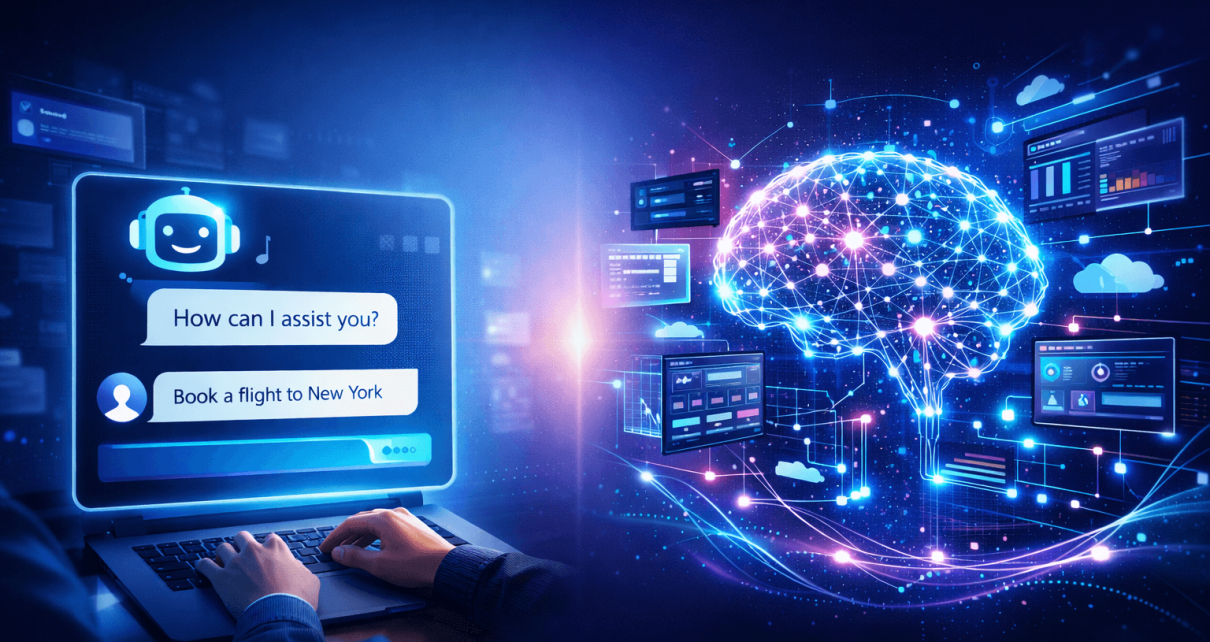
Artificial intelligence has evolved at a breathtaking pace over the past few years. In 2023 and 2024, businesses rushed to integrate AI chatbots into their websites and mobile apps. By 2025, conversational AI became a standard feature rather than a differentiator.
Now, as we move into 2026, the competitive advantage no longer lies in having a chatbot that answers questions – it lies in deploying agentic workflows that can autonomously plan, execute, and optimize tasks across systems.
If you are planning to build or upgrade an AI-powered application, your technology partner must go beyond chatbot development. They must specialize in proactive AI systems – intelligent agents capable of independent action, decision-making, and cross-platform execution.
This article explores:
- The shift from reactive AI to agentic workflows
- Key benefits of autonomous AI agents
- Cost differences between chatbots and agentic systems
- Use cases transforming industries
- Why India is the best location to hire AI-powered app development companies
Let’s explore why 2026 demands a different kind of AI partner.
The Evolution of AI in Applications
Phase 1: Rule-Based Automation
Before generative AI, most applications relied on fixed workflows:
- Predefined triggers
- Conditional logic
- Manual approvals
- Static automation scripts
These systems were efficient but rigid.
Phase 2: Reactive AI (Chatbots & Virtual Assistants)
With the rise of large language models, businesses began implementing chatbots that:
- Answer user queries
- Provide customer support
- Summarize documents
- Assist in navigation
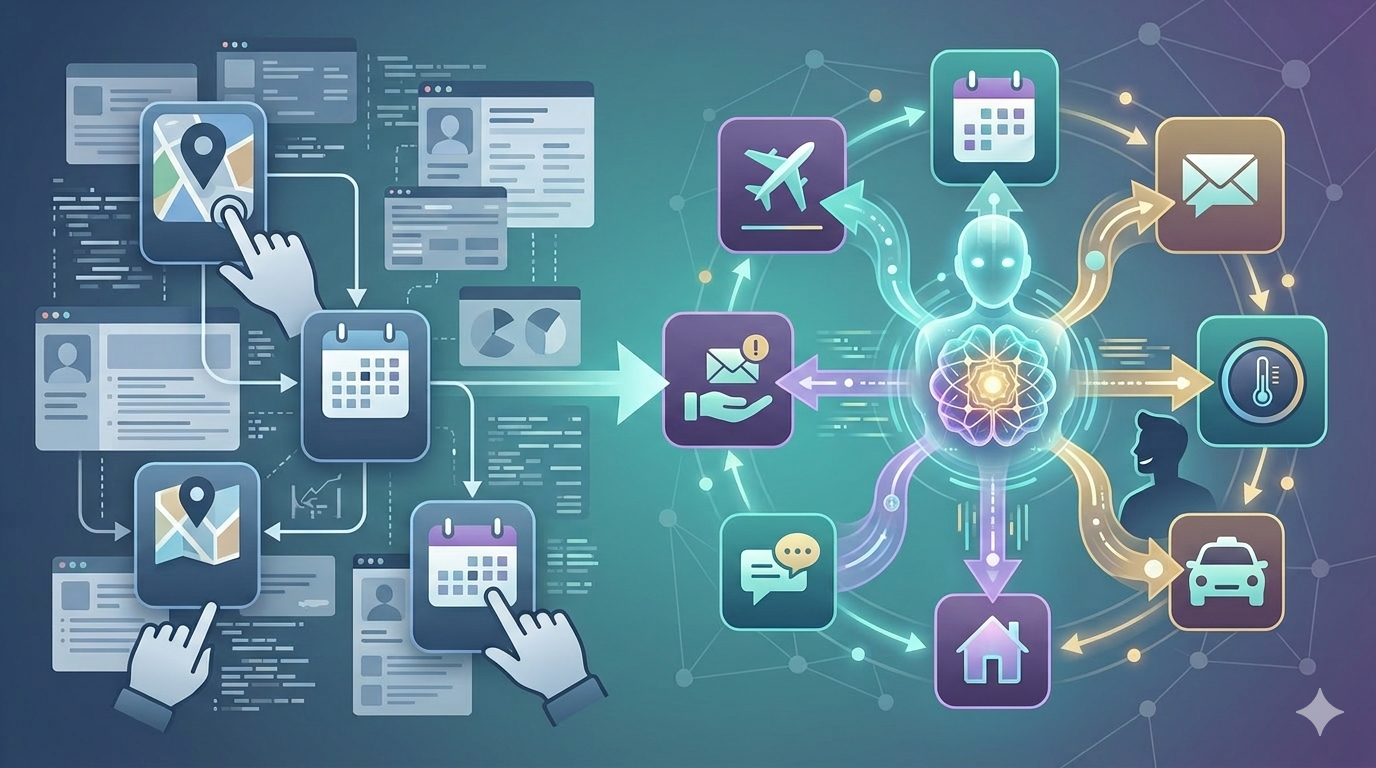
While useful, these systems are reactive. They wait for user input and respond accordingly. They do not independently initiate tasks or coordinate complex processes.
Phase 3: Proactive AI (Agentic Workflows)
Agentic AI represents the next evolution.
Instead of responding to prompts, AI agents:
- Identify goals
- Break them into sub-tasks
- Interact with multiple tools
- Execute actions autonomously
- Learn and optimize outcomes
This is not just conversation – this is intelligent task orchestration.
Understanding the Core Difference: Chatbots vs Agentic Workflows
What Is Reactive AI?
Reactive AI systems:
- Wait for instructions
- Operate within a single interface
- Provide responses, not execution
- Have limited memory or context
For example:
A chatbot can tell a customer how to reset their password.
But it cannot detect unusual login behavior, notify the user, temporarily lock the account, generate a report, and escalate to security – all on its own.
What Are Agentic Workflows?
Agentic workflows involve AI agents that:
- Operate toward defined objectives
- Access APIs and databases
- Make decisions based on context
- Perform multi-step task execution
- Continuously monitor outcomes
They act more like digital employees than digital assistants.
Why 2026 Apps Must Be Built Around Agentic AI
1. Users Expect Execution, Not Explanation
In 2024, users were impressed if a chatbot could provide information.
In 2026, they expect:
- Bookings to be completed
- Payments processed
- Reports generated
- Meetings scheduled
- Workflows automated
Users don’t want answers – they want results.
2. Businesses Need Operational Efficiency
Companies are under pressure to:
- Reduce operational costs
- Increase productivity
- Minimize manual intervention
- Improve customer satisfaction
Agentic AI reduces repetitive human involvement in:
- Sales qualification
- HR onboarding
- Customer ticket resolution
- Inventory management
- Financial reconciliation
3. Competitive Differentiation
If your competitor uses AI agents to:
- Proactively retain customers
- Auto-optimize marketing campaigns
- Predict churn
- Manage supply chains
A simple chatbot will not help you compete.
Real-World Use Cases of Agentic Workflows
1. E-Commerce Platforms
Instead of answering product queries, AI agents can:
- Monitor cart abandonment
- Offer dynamic discounts
- Auto-replenish inventory
- Negotiate supplier contracts
- Optimize pricing strategies
2. Healthcare Applications
Agentic AI can:
- Monitor patient data
- Trigger alerts automatically
- Schedule follow-ups
- Generate compliance reports
- Coordinate with labs and pharmacies
3. FinTech Platforms
AI agents can:
- Detect fraud in real time
- Block suspicious transactions
- Generate risk profiles
- Initiate verification workflows
- Automate loan underwriting
4. Enterprise SaaS Tools
Agentic workflows enable:
- Automated project management
- Intelligent resource allocation
- Performance tracking
- Predictive analytics
- Revenue forecasting
Benefits of Agentic Workflows Over Traditional Chatbots
1. Autonomous Task Execution
- Unlike chatbots that respond, agentic AI acts.
- This dramatically reduces human workload.
2. Multi-System Integration
Agents can connect:
- CRM systems
- ERP platforms
- Payment gateways
- Cloud services
- Internal databases
This makes them powerful orchestration engines.
3. Continuous Learning & Optimization
Agentic systems:
- Analyze outcomes
- Adjust strategies
- Improve performance
- Detect inefficiencies
Chatbots typically lack this operational feedback loop.
4. Higher ROI Over Time
Although initial development costs may be higher, agentic workflows:
- Reduce staffing costs
- Improve conversion rates
- Increase retention
- Enhance operational speed
The return on investment often surpasses simple chatbot implementations within 12–24 months.
Cost Differences: Chatbots vs Agentic AI Systems
Understanding cost structure is crucial before choosing your AI partner.
Development Cost of Chatbots
Typical cost factors:
- UI integration
- LLM API usage
- Basic conversation flow design
- Limited backend integration
Approximate investment:
- Lower upfront cost
- Faster deployment
- Minimal infrastructure complexity
Best for:
- FAQs
- Customer support automation
- Lead qualification
Development Cost of Agentic Workflows
Agentic systems require:
- Advanced system architecture
- API orchestration
- Memory management
- Workflow automation logic
- Data governance setup
- Security compliance
Investment level:
- Higher upfront development cost
- Longer planning cycle
- Strong backend engineering
However, they:
- Replace multiple manual roles
- Reduce operational overhead
- Deliver exponential long-term savings
In 2026, the question is not “What is cheaper?” – it is “What scales intelligently?”
Key Technical Capabilities Your 2026 App Partner Must Have
When selecting an AI-powered app development company, ensure they specialize in:
1. Workflow Orchestration Architecture
Designing multi-step automation pipelines.
2. Tool & API Integration
Connecting AI agents with third-party platforms.
3. Secure Data Engineering
Ensuring privacy, encryption, and compliance.
4. Cross-Platform App Development
Building agent-enabled:
- Android apps
- iOS apps
- Web platforms
5. AI Strategy Consulting
Helping you decide:
- Where autonomy makes sense
- Where human oversight is necessary
- How to scale responsibly
Why India Is the Best Location to Hire AI-Powered App Development Companies
When building advanced AI-driven systems, cost, expertise, and scalability matter.
India has emerged as a global hub for AI-powered app development for several reasons:
1. Deep Technical Talent Pool
India produces millions of engineering graduates annually with strong expertise in:
- Machine learning
- Data science
- Full-stack development
- Cloud computing
AI-focused development firms in India are already working on:
- Autonomous systems
- Workflow automation
- Large language model integrations
2. Cost Advantage Without Compromising Quality
Compared to the US, UK, or Europe:
- Development costs are significantly lower
- Operational expenses are optimized
- Long-term support is affordable
This makes building complex agentic systems financially viable.
3. Experience with Global Clients
Indian AI development companies regularly serve:
- Startups
- Mid-sized businesses
- Enterprises
- Fortune 500 companies
They understand compliance standards such as:
- GDPR
- HIPAA
- SOC 2
4. Strong Ecosystem & Innovation Culture
Cities like:
- Bangalore
- Hyderabad
- Pune
- Jaipur
Have thriving AI and SaaS ecosystems.
Many AI-powered app development companies in India specialize in:
- Generative AI
- Agentic workflows
- Automation platforms
- Custom enterprise software
Choosing the Right AI App Development Partner in 2026
Before signing a contract, evaluate:
1. Do They Go Beyond Chatbot Demos?
Ask:
- Have they built autonomous systems?
- Can they demonstrate multi-step task execution?
2. Do They Understand Business Objectives?
A true AI partner:
- Aligns agents with KPIs
- Defines measurable success metrics
- Plans scalability from day one
3. Do They Offer Post-Deployment Optimization?
Agentic systems require:
- Monitoring
- Fine-tuning
- Prompt engineering
- Continuous improvement
The Strategic Advantage of Agentic Workflows
Companies that adopt proactive AI gain:
- Faster decision-making
- Reduced operational delays
- Improved customer experience
- Lower dependency on manual processes
- Higher scalability
By 2026, businesses that rely solely on chatbots will likely fall behind competitors using autonomous AI agents.
Final Thoughts: Beyond Conversation, Toward Intelligent Action
Chatbots were the first step in AI adoption. They helped businesses explore conversational interfaces and reduce support workload.
But the future belongs to agentic workflows.
In 2026, successful apps will not just answer questions – they will:
- Execute strategies
- Manage operations
- Automate growth
- Optimize performance
When choosing your next AI-powered app development partner, look for expertise in:
- Autonomous agents
- Workflow orchestration
- Secure integrations
- Scalable architecture
And if you’re considering the best global location to hire such expertise, India remains one of the most strategic and cost-effective destinations for AI-powered app development.
The shift has already begun.
The real question is:
Will your app still be waiting for prompts – or will it be taking action on its own?